Scaly mites (knemidocoptiasis)
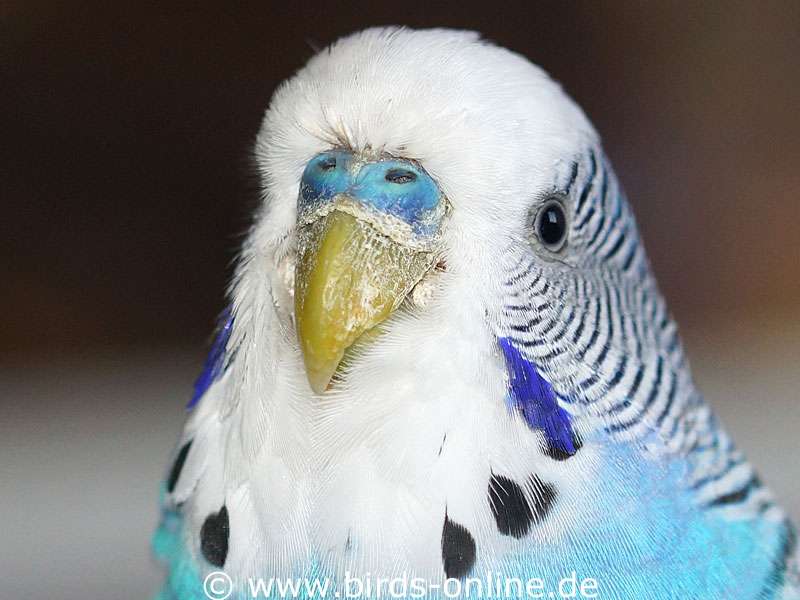
In budgies, cockatiels, and several other pet bird species, specific external parasites (ectoparasites) occur. Some of these tiny creatures feed on the skin as well as on the keratin of the beak: mites of the genus Knemidocoptes. They cause a condition called scaly face and/or scaly legs.
We who are keeping pet birds in Central Europe frequently have to deal with two species, each of which inhabits a different part of the birds’ bodies. Mostly the face is affected, this is especially true for the beak and the cere as well as the eyelids. Also, the legs and feet can be populated by these mites. Besides, during prolonged or very severe infestations, these tiny arachnids spread to the cloacal area. But this is not very common, so in most cases you will just have to deal with plaques on the feet and in the face.
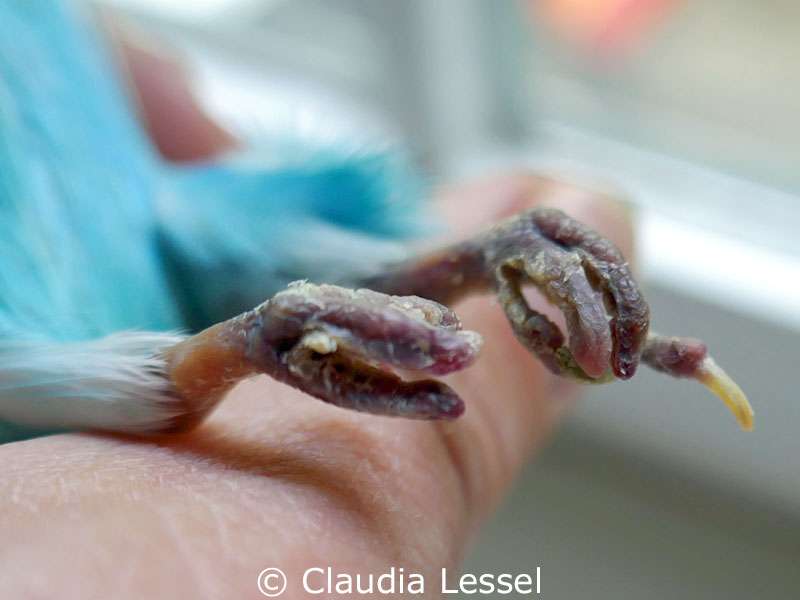
For the affected birds, a parasite infestation like this can become life-threatening in the worst case, which is why bird owners should be informed about how the parasites can be detected and which therapeutic measures are effective. This ailment is potentially lethal because it can destroy the beak. Without their beak, the birds cannot eat and will starve to death. But it may also happen that a severe and long-lasting infestation causes them to lose their claws forever and thus become severely handicapped later on.
This chapter first describes the two species that are responsible for most cases of scaly face/feet in pet birds and provides case reports. Further down the page, you will learn more about the treatment options available.
Knemidocoptes mutans – mites causing scaly leg
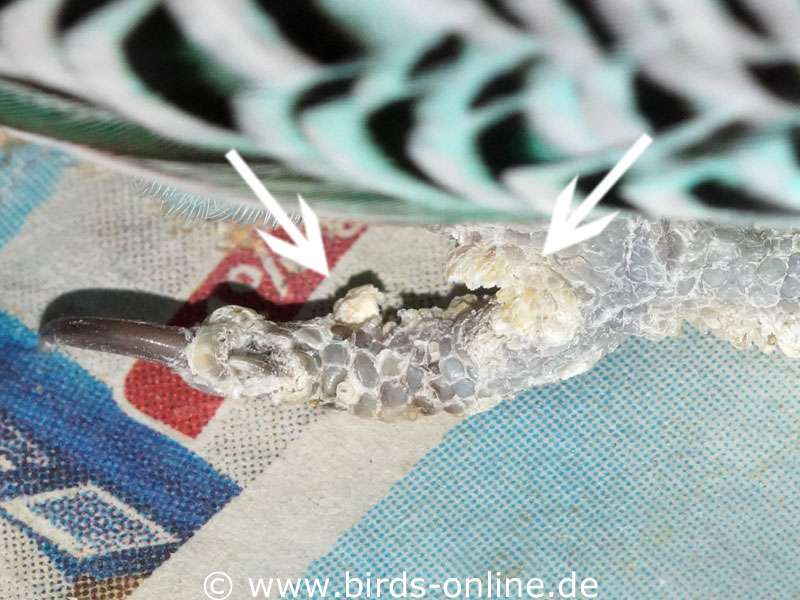
Mainly mites Knemidocoptes mutans colonize the feet and legs of birds. Besides, they can appear on the face of the birds. In such cases, the mites reside on the beak, on the cere, and eventually also on the eyelids. Canaries are particularly often affected, but other bird species, including budgies, can suffer from knemidocoptic mange, too.
Adult male individuals of Knemidocoptes mutans have a round body that is just 0.25 millimeters long. Females are about twice as large as their male conspecifics, with a body length of 0.5 millimeters. Larvae are even smaller than adult males.
Because the mites are this small, you usually can’t see them without a magnifying glass. And it’s difficult to spot them for another reason.
Symptoms associated with Knemidocoptes mutans

Although Knemidocoptes mutans are categorized as external parasites, they do not live on the surface of the body in the literal sense. Rather, they burrow into the skin of their host animal and reproduce there. That is, they lay their eggs in the bird’s skin. The mite “nests” are usually located on the legs and toes. These mites are sometimes also found on the face of the birds, but this happens quite rarely.
Quite quickly, the skin of the legs of an affected bird becomes dry, very scaly, and initially bears white coatings that later grow into increasingly thick, bark-like plaques. Also, the mites secrete metabolic waste that can severely irritate the skin. As a result, itching, swelling, and often skin rashes occur – vets call it dermatitis. Some birds bite their skin until they bleed to get some relief from the constant itching. Therefore the mere presence of the mites often causes heavy discomfort and leads to inflammations.
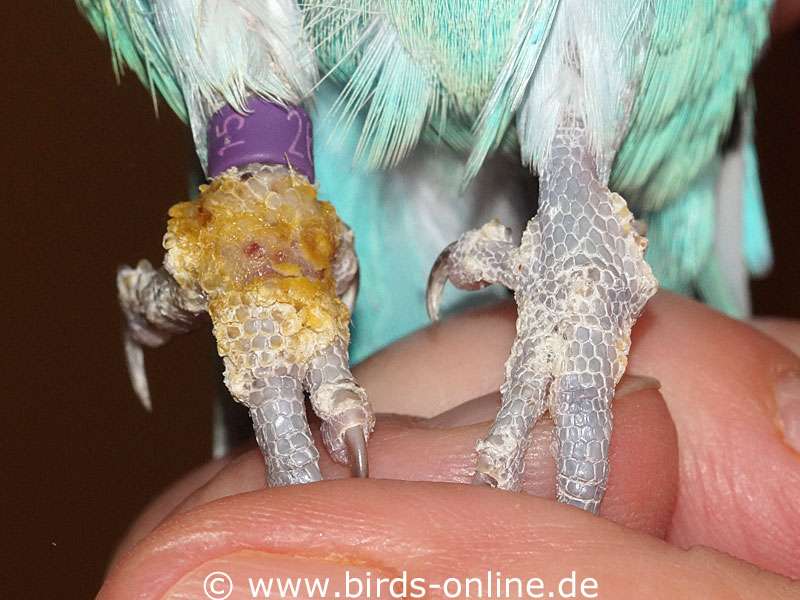
Because it is common in Germany for many birds to wear a ring or leg band, swelling of the skin caused by these mites can lead to extremely dangerous constrictions. This is because if a leg swells badly, in the worst case, the foot is no longer supplied with enough blood and will die or the ring will even grow into the sore skin. In the case of a severe infestation, it is therefore often advisable to have the leg band removed by an avian vet so that the risk of the foot dying or the ring growing in is avoided. Sometimes the mites dwell right under the ring and are barely visible even if plaques are forming there. This is particularly dangerous because once you notice it, the foot may already be damaged because of a lack of blood circulation. Such swellings can appear very quickly, often within two to three days. Hence it is important to look closely at the legs and feet of pet birds wearing leg bands every day.
Knemidocoptes pilae – mites causing scaly face
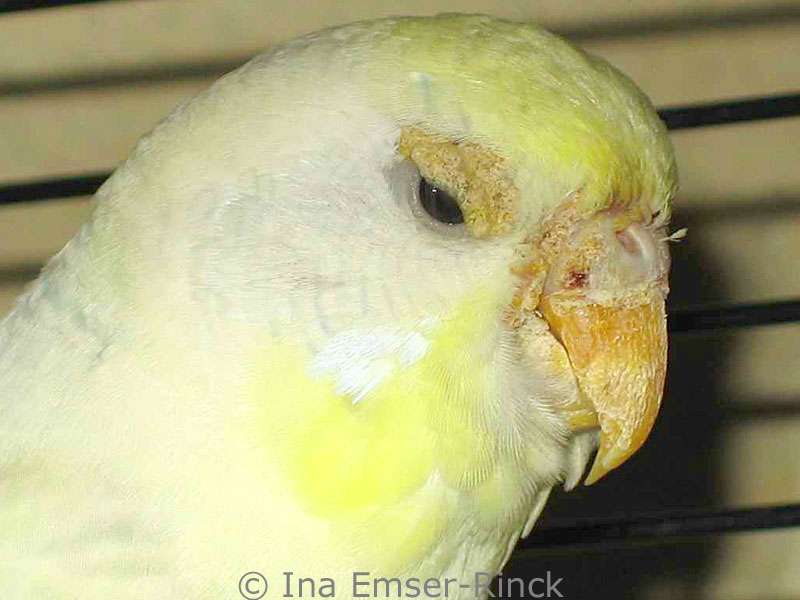
Vets refer to scaly face in case the head is affected. Typically, the mite species Knemidocoptes pilae occurs on a bird’s head and therefore is responsible for this type of ailment.
The females of this mite species are slightly oval and measure about 0.4 millimeters by 0.3 millimeters. Males are even smaller. Because of their little size, they are invisible to the naked eye in general.
Unlike the above-mentioned Knemidocoptes mutans, the other species (Knemidocoptes pilae) mainly affects the beak, the cere, and the eyelids. Besides, the legs and feet, as well as the cloaca (vent), can be populated by these parasites. In most cases, the infestation starts in the face of the affected bird and spreads to the other parts of the body.
Symptoms associated with Knemidocoptes pilae

If there is an infestation of Knemidocoptes pilae and just the beak is affected, this causes no itching at first. In the early stages, the presence of the mites is also hardly noticeable by looking at the birds. As long as there are no plaques or damages to the beak’s/cere’s surface, you can see barely anything.
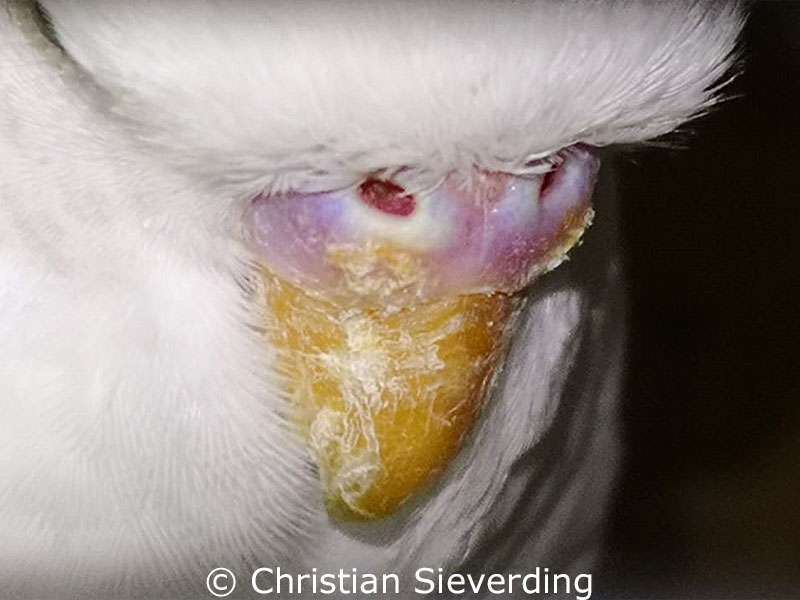
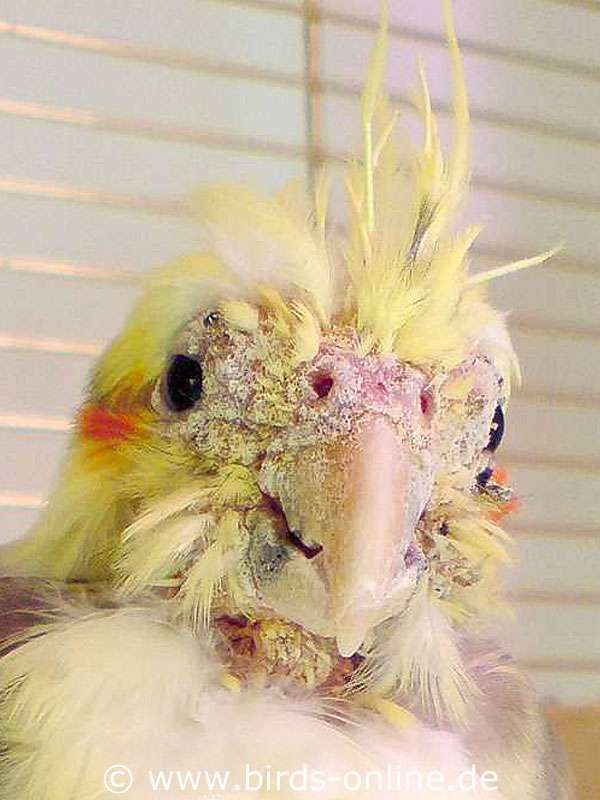
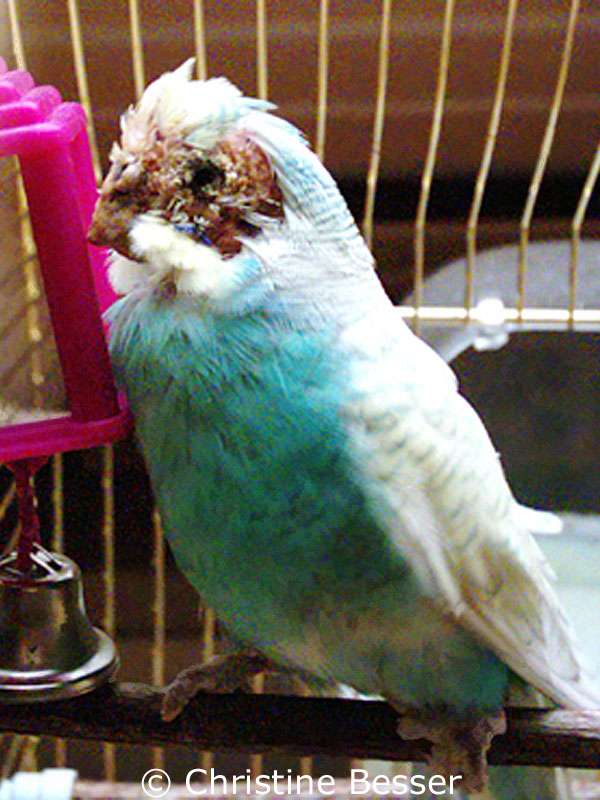
But things tend to change quite quickly. First, thin crusts and later barky plaques show up, which are usually visible in the corners of the beak and on the beak itself, but also on the cere of affected birds. These plaques appear as pale, white coatings that become thicker and more crusty within a few days.
Because some birds sometimes are smeared with vegetable or fruit remnants in their face after eating fresh food, these can easily be mistaken for plaques caused by mites. It is most helpful to look very closely with a magnifying glass because when doing so, tiny notches and drill holes in the beak or cere can be spotted beneath the crusty deposits of mites in case you are dealing with an infestation of these parasites.

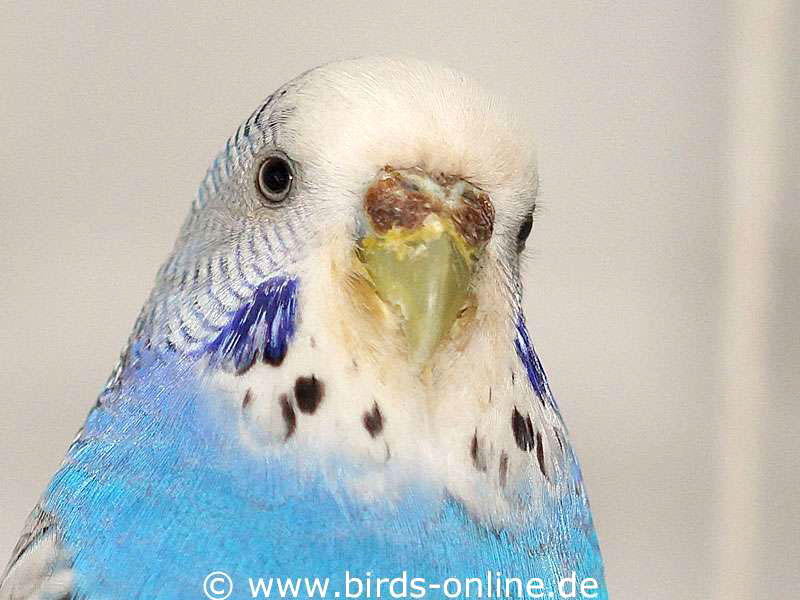

The longer the mites can bore their small tunnels into the bird’s skin or keratin of the beak, the more porous it will become. At first, only slight unevenness can be seen, but this becomes more prominent over time. Later even small holes can be spotted – especially if you use a magnifying glass.
If the skin on the eyes, legs, or around the cloaca is also affected, this is accompanied by severe itching because of the mechanical irritation and the metabolic products secreted by the mites. The bird appears restless and scratches itself frequently.
Besides, due to the infestation of the facial skin as well as the skin around the cloaca, the feathers in this body regions often drop out. In some birds, the feather follicles are permanently damaged, so that even after successful treatment of the mite infestation, the feathers will never grow back.
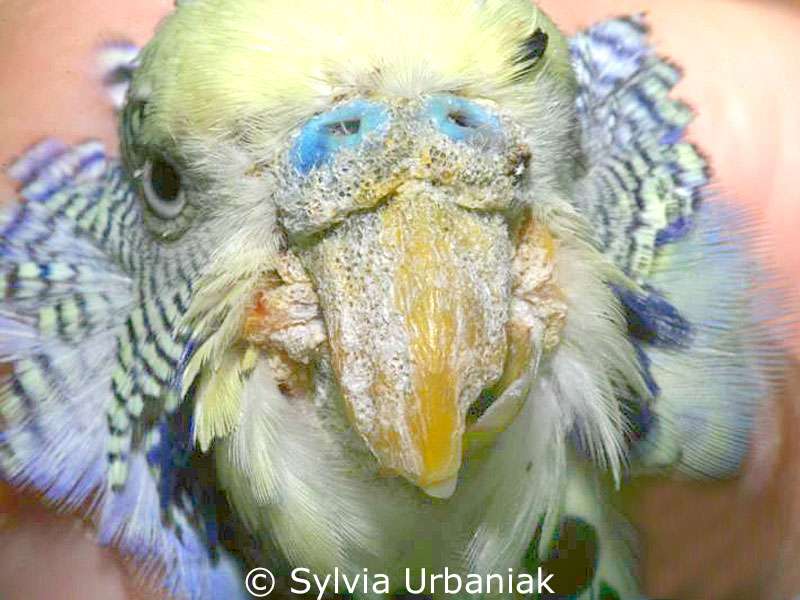
If the infestation continues untreated, severe complications usually result, which are not only painful for an affected bird but can even be fatal. In particularly serious cases, the mites perforate the beak until it grows crooked (deformed) and finally breaks because it has become thoroughly porous. The affected bird may either die immediately from heavy blood loss or starve to death in agony because she or he can no longer eat after losing the beak.
Therefore, it makes sense to consult an avian vet immediately if an infestation of Knemidocoptes mites is to be suspected. One should avoid at all expenses that the situation will escalate and that the mites will cause severe damage to the beak and cere or other parts of the bird’s body.
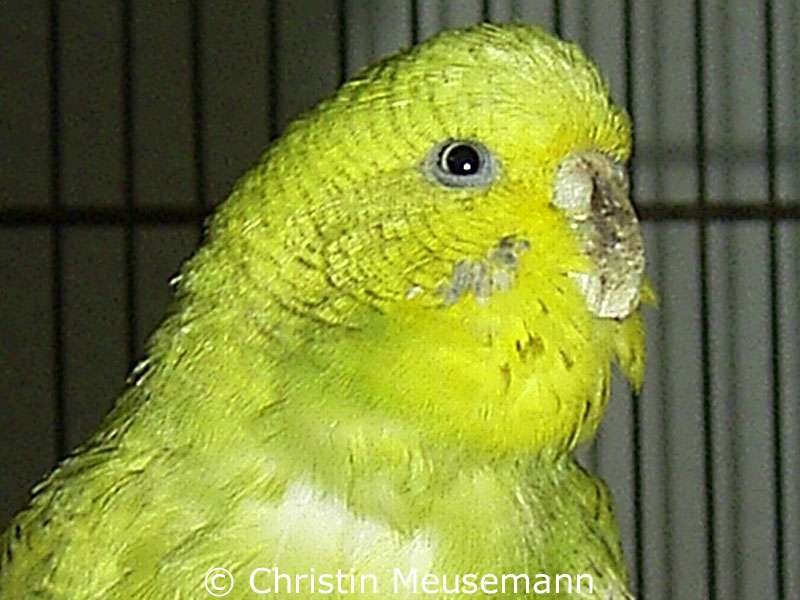
The following pictures show a budgie who was taken over by an animal welfare activist for care. Before that, the animal suffered untreated scaly face for a very long time. So both beak portions had grown crooked and been far too long. Unfortunately, the bird’s owner had not recognized the urgency and tried to cut the beak himself, tearing off large parts of the porous upper beak. It was only at this point that he asked a budgie expert for help. The female bird went through inexpressible agony and could no longer eat. She was extremely weak when the animal welfare activist saw her first. Regrettably, it was too late and the poor bird died due to the severe beak injury and the resulting debilitation. The sad truth is: Her life was wasted, although she could have been saved if only timely intervention had been made.
Please note: All photos have been taken after the bird had passed away, so the animal has not been stressed.
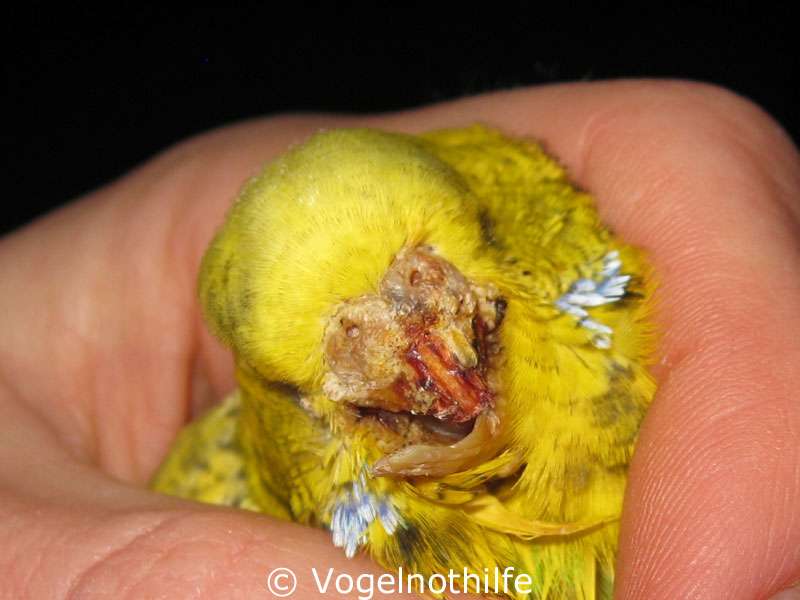
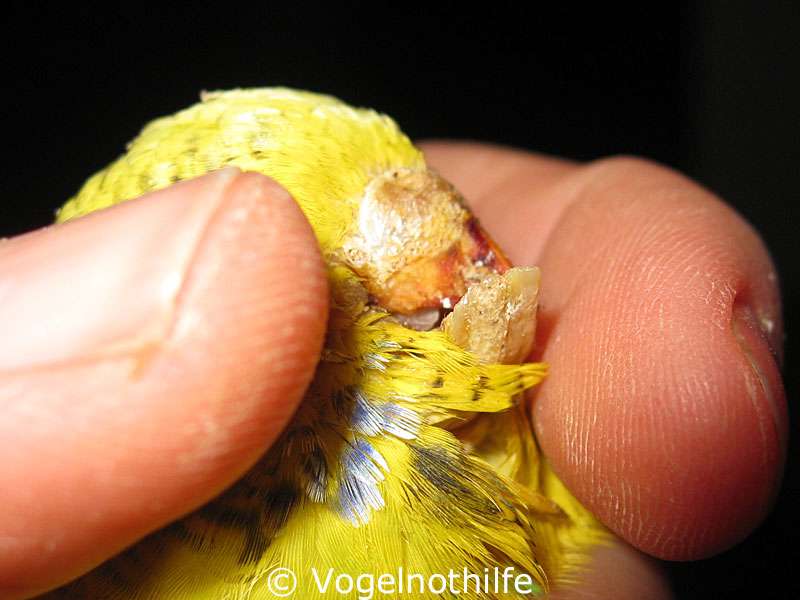
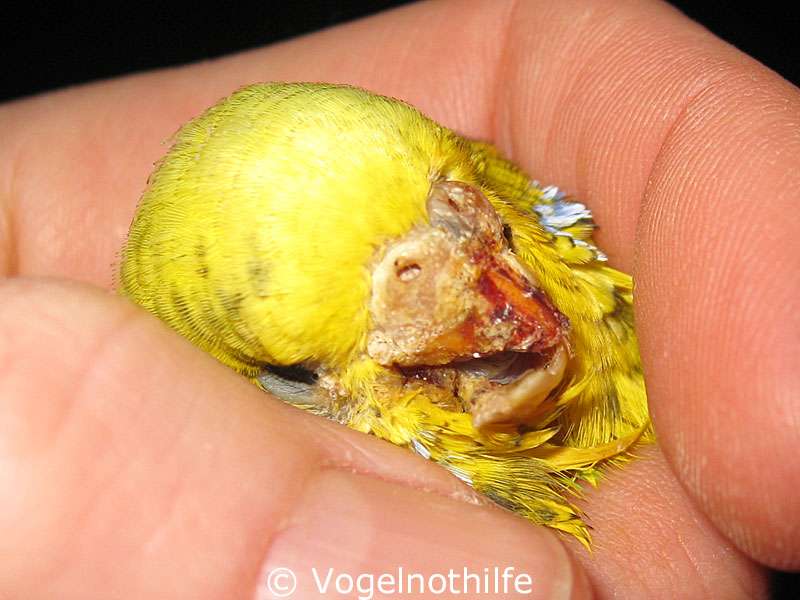

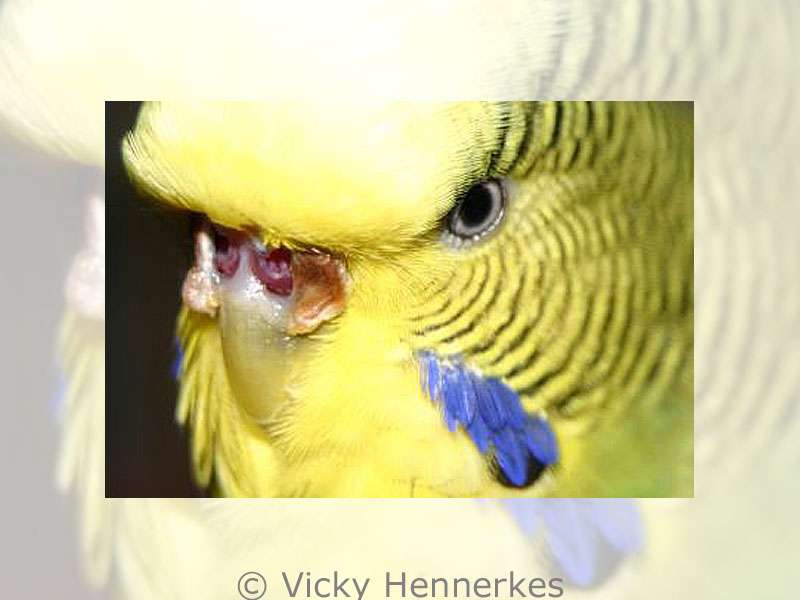
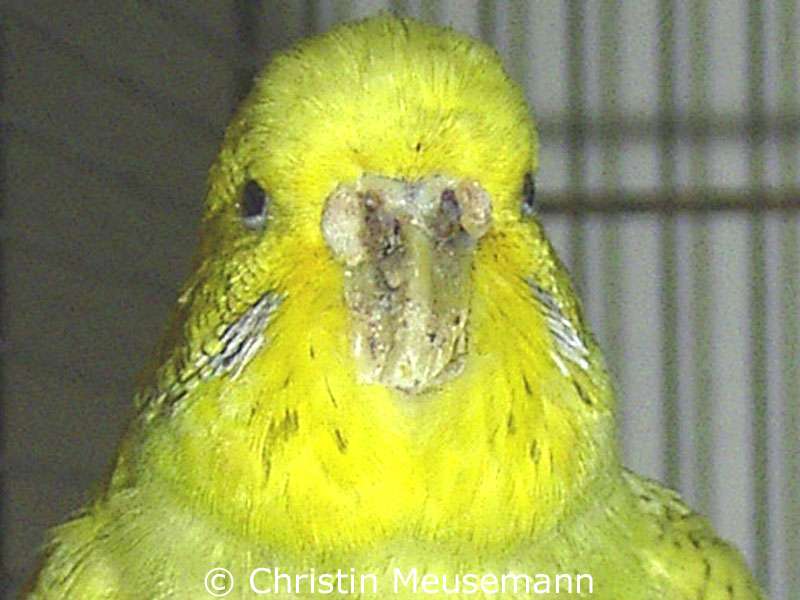
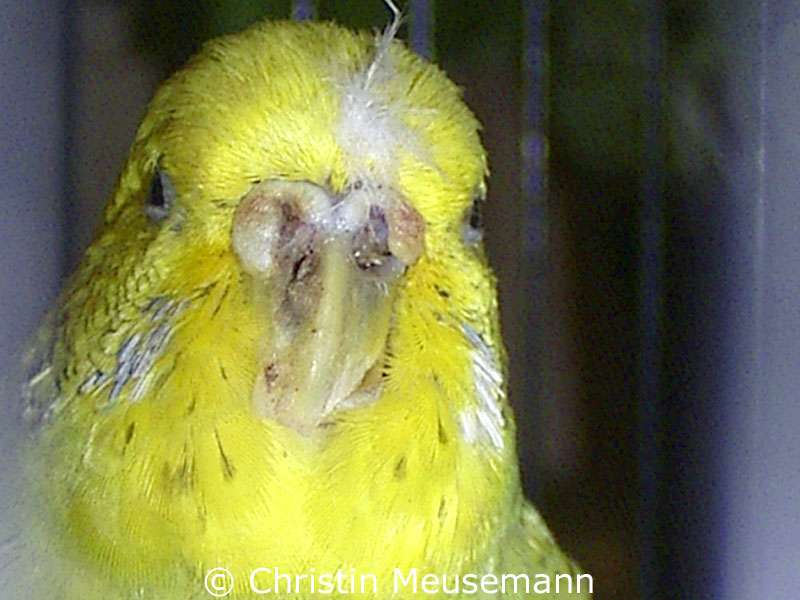
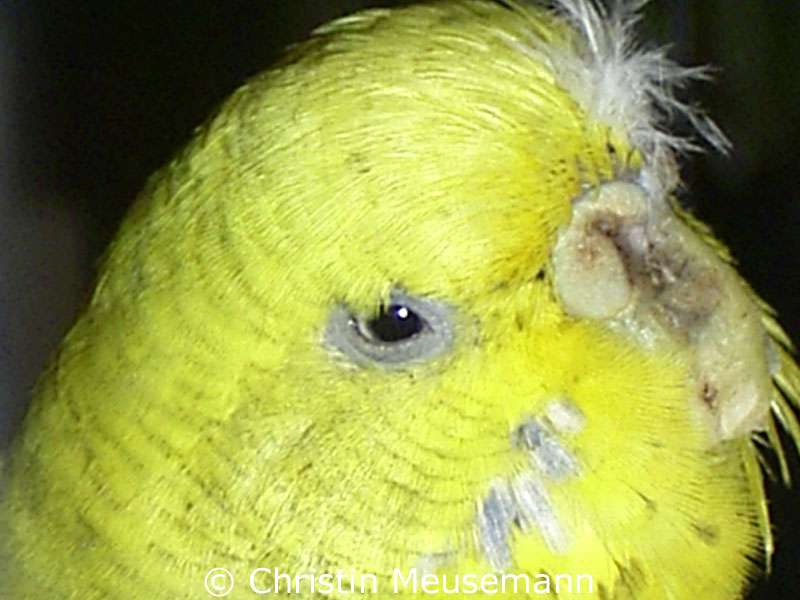
Comparatively unknown among bird owners is the fact that not only the beak can suffer severe damage caused by Knemidocoptes mites, but also the cere. It can be completely destroyed by these parasites if an infestation remains untreated – and the worst thing is: It will never grow back again! Therefore, with the help of a case study, information about the serious consequences that may be the result of knemidocoptic mange should be provided here.
The female budgie named Happy shown near this paragraph has been through a long ordeal. Her former owner did not take her to a bet, although she looked “strange” according to him. However, since Happy continued to stand on the perch, eat normally, and occasionally make a sound, the owner felt no need to see a vet despite her odd appearance. By the time Happy was taken over by a more attentive animal lover, her cere had been almost completely dissolved by the mites. The underlying sensitive areas of the nose, which normally are sheltered from contamination and blows by the cere, were henceforth not protected by the leather-like skin anymore. The risk of infection is high in such a case and the new owner of the bird had to constantly take care that Happy wouldn’t hurt her nose.
Transmission of Knemidocoptes mites
Both species of Knemidocoptes mites which are frequently found in pet birds are mainly transmitted from the parents to their children in the nest box during feeding or direct physical contact. Transmission from one adult bird to an adult conspecific has also been observed. Therefore, if birds are kept in pairs or flocks, caution is always advised in the event of infestation with these mites as the entire flock may be affected.
Years can pass between the actual infection and the appearance of the first symptoms. But often, the first visible symptoms of a Knemidocoptes mite infestation in budgies appear when they are six to twelve months old, so it usually happens shortly after you took the animals home. However, it can also take considerably longer until the first symptoms show up. In other bird species, the periods are usually similar to what is typical in budgies.
Treatment of scaly face and scaly legs
The most important thing first: There are several opinions among bird experts and owners as well as avian vets, which therapy method is the best and most effective. Also, it is important to know that infestation of both mite species (Knemidocoptes mutans and Knemidocoptes pilae) is usually cured in the same way.
According to a German book written by avian vets for their colleagues (Leitsymptome bei Papageien und Sittichen: Diagnostischer Leitfaden und Therapie, Michael Pees et al., Enke-Verlag, 2004, p. 140 ff.) there is a simple remedy which can be applied in mild cases. Paraffin oil which you can buy in pharmacies should be spread on the affected skin. By the way, you can use olive oil or sunflower oil instead of paraffin oil, but it adheres less firmly to the affected skin than paraffin oil. I successfully treated one of my birds suffering from a very mild infestation by using this remedy. No subsequent treatments were necessary, but this is by no means typical!
If only the beak is affected, the keratin portion and the skin in the corners of the beak should be coated with paraffin oil (or olive/sunflower oil) once or twice a day for at least two, better four weeks. For this purpose, use a clean cotton swab each time. Make sure that the bird does not swallow any oil because it could cause diarrhea and other digestive disorders. Please keep in mind that although this kind of treatment does not involve “chemicals”, it is stressful for the bird since you have to grip the animal frequently.
The skin around the cloaca and the legs can also be treated with paraffin oil or one of the previously mentioned edible oils. However, the eyelids should not be treated with an oily substance as a layman, because otherwise, the bird may not be able to see anything if oil gets into the eyes. You should keep up the treatment for at least two, better four weeks, even though the barky plaques usually fall off after a few days. This is a relief for the birds, but it doesn’t mean all mites have been killed. So please don’t stop the treatment too early.
You may wonder how paraffin and edible oils work. Once applied, they form a thin film that seals the burrows of the mites who then suffocate. If the mites try to escape and get in touch with the oil, their tiny body is covered by it and they lose their ability to breathe. This kind of treatment needs to be continued for a long time to make sure that the newly hatched larvae suffocate as well. So far, so good. Still, there is a small but serious problem: The mites’ eggs do not generally die as a result of this kind of treatment. Therefore you should be aware of the residual risk of eggs being still present in the borrows or on the skin. So a new generation of mites may hatch after you stopped the treatment.

If the mite infestation is very strong and even the bird’s eyelids are affected, you should take your feathered patient to an avian vet. The same applies to very anxious birds, for whom twice-daily gripping over one month would be too much stress. It is then advisable to use a medication that selectively kills the parasites. Antiparasitics containing the active ingredient ivermectin are often used. The agent is usually dripped into the neck of the bird (spot-on treatment) or, in particularly severe cases, administered into the body by syringe. Applied to the skin of the neck, the antiparasitic drug penetrates through the skin layers, enters the bird’s organism, lodges in its skin as well as in the keratin portion of the beak, and in this way poisons the mites while they are feeding. The same happens when the agent is injected into the body. As described above, paraffin or edible oil can be additionally used for a few days to soften the plaques caused by the mites and then carefully loosen them, which relieves the bird of some of the unpleasant itching.
It should be additionally mentioned that the poison contained in the antiparasitic can be dangerous for birds as well. Some wild birds, especially European Greenfinches (Chloris chloris), die even if they receive only a very small dose! Fortunately, budgies and many other species of pet birds are usually not as extremely sensitive to these drugs. But there is always a residual risk of undesirable side effects. An overdose, in particular, can be life-threatening. Therefore, such treatment should always be carried out by an experienced avian vet.
And there is something else to consider: The longer you delay treatment, the worse the general condition of the affected bird will become. This could increase the risk of intolerance: the weaker a bird is, the more sensitive he or she is to medication.
Therefore, be sure to see your avian vet early to prevent a bird from being too weak to survive the therapy in the first place! Besides, it is of utmost importance to follow the vet’s prescription exactly so as not to put the bird in danger. In most cases, mite-infested birds are treated several times with an antiparasitic drug at intervals of a few days or weeks.
There is no consensus among avian vets as to whether only birds visibly infested with mites or all birds of a flock, i.e. also the conspecifics not showing any symptoms, must be treated. Bird owners who want to be on the safe side, treat all their birds to make sure the mites will be gone for good.
Similar diseases: Fungal beak infections
If birds are kept under poor hygienic conditions or if their immune system is weakened by some reason, a fungal infection of the beak can occur. Often, visible symptoms are brittleness or changes in the surface structure of the beak. Furthermore, color changes may appear, which in budgies usually consist of the beak becoming somewhat darker than it usually is. In contrast, other bird species, for example, Grey parrots, may show a brightening of the otherwise dark beak. Color deviations in combination with a change in surface structure should therefore always be considered a potential health issue and should be checked by an experienced avian vet.
A fungal beak infection may look fairly similar to an infestation of scaly mites, at least in the beginning. Therefore, it is important that an experienced avian vet rapidly provides an appropriate diagnosis. Beak fungus is usually easy to treat with suitable medications and little damage is left to the keratin portion of the beak, provided the disease is in its early stages. In budgies, fungal beak infections are relatively rare compared to scaly mites. However, this is not the case for all pet bird species.