Birds Online – everything about budgies
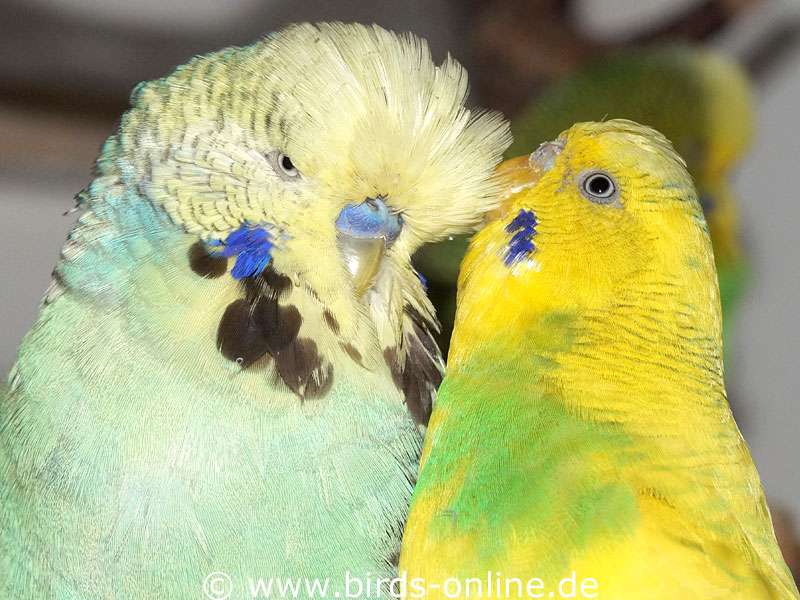
Welcome to Birds-online.de, my website about budgies. This project started in 1997 and has been enormously growing since. The aim is to offer profound information on keeping and feeding these amazing little Australian birds species-appropriate. I would like to provide a comprehensive collection of information for all interested bird owners who love their birds as much as I love mine.
Initially, the focus was on budgies, but many of the details presented in the various chapters of this website apply equally to several other bird species. And by the way, I also keep Lineolated parakeets and Diamond Doves myself.
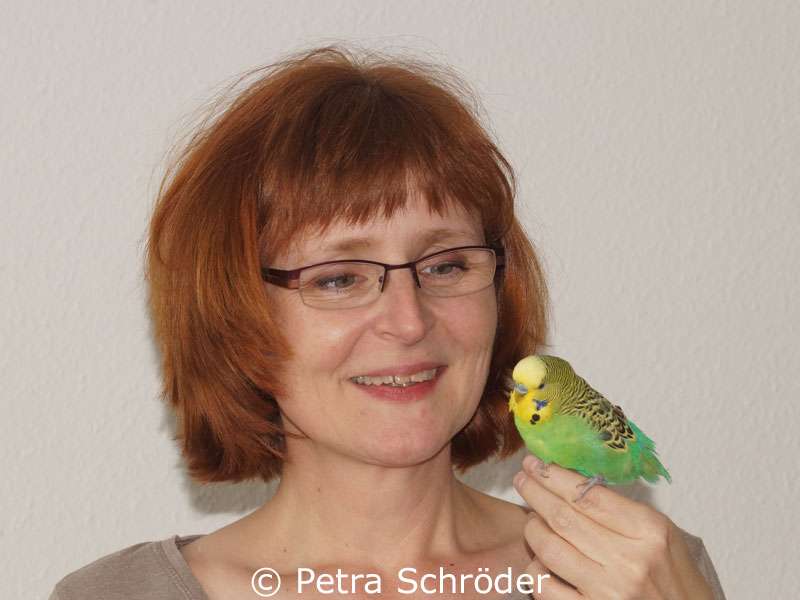
You can find far more than 1,000 chapters that are in German on Birds-online.de. Some of them are available in English and I’m still busy translating more chapters for you. In case you need information on a topic that’s not available in English so far, please drop me a line. Maybe there is a German text that you can read by using a translation tool. And of course, you can search Birds-online.de with the internal search engine or ask me questions via email.
On Facebook, you can find us as well – but in German only. Please click here for visiting us there.
Warm greetings
Gaby Schulemann-Maier
This website is available for more than two decades now and is currently being revised. Some of the old English chapters are not yet ready again. If you would like to help translating the new revised texts (German -> English), please feel free to contact me.
Browse the main categories
General facts